Porsche – An Unassuming Hedge Fund
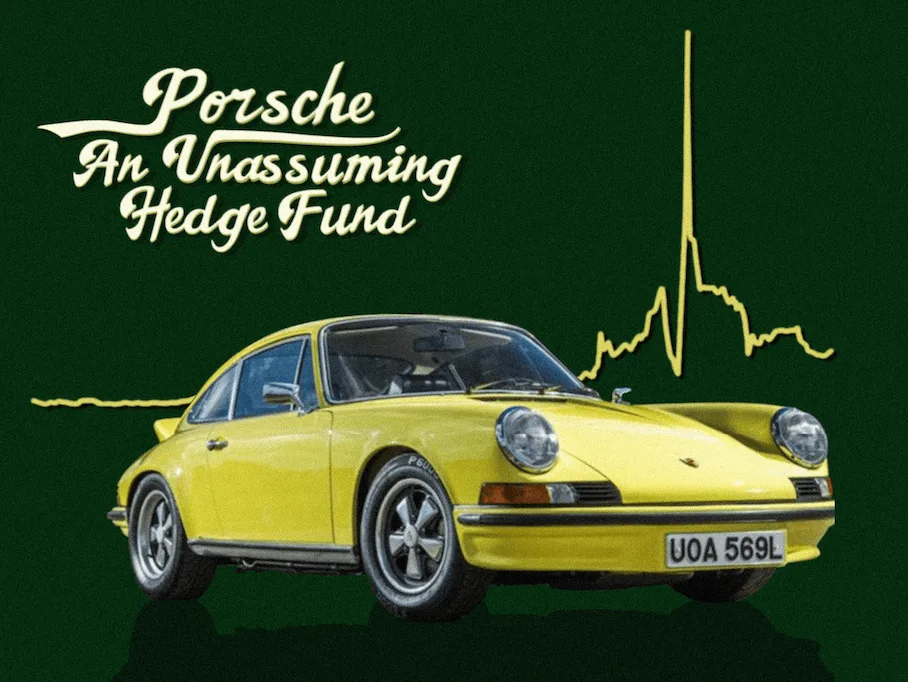
Porsche, a name that resonates naturally aspirated engine melody for the average car enthusiast or prompts the image of an ideal mid-life crisis sports car for the non-car enthusiast.
However, regardless of one’s association with cars, one probably doesn’t perceive Porsche as a company that could bankrupt every single German Hedge Fund back in 2008.
This is the story of Porsche’s iconic financial trade, one that would yield them a $13.5 billion profit overnight but would culminate into the typical “hunter gets hunted” story.
Porsche’s History and the Influence of Wendelin Wiedeking
Established in 1931, in Stuttgart Germany by Ferdinand Porsche, the company was initially an automobile design firm. A caterer to Volkswagen, Porsche designed the iconic VW Beetle and later morphed into a sports car manufacturer.
The company was doing decent until 1993 when the effects of the recession started to surface. That year, Porsche’s US sales plummeted 90% (measured over 8 years).
Inching closer to bankruptcy, the board appointed former engineer Wendelin Wendelin Wiedeking as CEO.
With a “‘No risk, no fun” motto, Wiedeking set out to turn Porsche’s fate around. Under his leadership, the company announced the Cayenne – a family SUV, and the Boxster – an affordable sports car while ditching existing unprofitable models.
Further collaborations with Japanese consultancy and engineering firms granted Porsche the recipe to increase efficiency across all facets of production. Not only did the adoption of modern machinery and techniques improve quality, but Porsche had once again started to print them Euros.
Selling 7,524 cars in the US in FY1996 – Porsche booked a $28 million profit, advancing that figure to 33,859 cars and almost a billion dollars in profit by FY2005 – a meteoric rise.
Porsche managed to survive and thrive without seeking debt, as their CFO boasts, “We learnt the hard way that banks are there for you when you don’t need them, and when you do need them, they’re nowhere to be seen.”
The business was booming again, and with the crown of transitioning a dying business into one of the most profitable sports car companies ever obtained, an ambitious Wiedeking – paired with a similarly ambitious Holger Härter as CFO – looked for more opportunities to expand.
And for the ambitious duo, nothing could be more ambitious than acquiring Volkswagen – the largest car manufacturer in Europe by sales.
The ambitious use of “ambitious” is to illuminate the magnitude of “ambition”.
Porsche and Volkswagen
The two manufacturers maintained close historical ties ever since Porsche’s design consultancy days. More recent engineering collaborations on the Cayenne and Panamera models bolstered this relationship. To vastly add to the relationship, Volkswagen’s newly appointed Chairman would just happen to be the great-grandson of Ferdinand Porsche – yes, the dude who founded Porsche. A takeover by Porsche seemed attainable, didn’t it?
Ferdinand Piëch – A Porscheboi who wasn’t born with a silver spoon
Despite arising from the Porsche family lineage, Piëch wasn’t simply handed over the control over Porsche owing to family disputes and other controversial stuff.
However, keen on influencing the automobile industry, the engineer bagged a job at Audi, played a pivotal role in developing the legendary Audi Quattro, a car that would eternally engrain the company’s name in the rally motorsports and the automobile industry.
Under Piëch, Audi transitioned into the sporty luxury car brand we adore and he was promoted to the CEO of the company, later becoming the Chairman of the parent company, Volkswagen.
Having attained the promotion to Volkswagen in 1993, when the financial crisis was tumbling sales, Piëch was handed over the job to sustain the company which had just booked a $1.1 billion loss, and make it profitable – which he did.
Piëch did for Audi and VW what Wiedeking did for Porsche – he revamped the entire brand, made it heavily profitable, and swerved it away from near bankruptcy.
The automobile management maestro made VW so profitable that in the coming years they would acquire Lamborghini, Bugatti, Bentley, part of Rolls Royce, and Ducati. Volkswagen as a manufacturer was suddenly in the league of the giants – Toyota, Honda, and GM.
Piëch was a man on a mission, having turned fortunes for the companies he spearheaded, acquiring Porsche, a family business he was refused control over, would seem to be the ideal culmination to his legacy.
Okay so we have a plot – an ambitious Wendelin Wiedeking, the CEO of Porsche wants to acquire Volkswagen for clout.
BUT
An equally ambitious Ferdinand Piëch, the Chairman of Volkswagen, who also happens to be the grandson of Porsche’s founder, wants to acquire Porsche, his family business, back for clout.

#1
It’s a battle for acquisition, hmmm interesting.
Stealth – A rare attribute for the vroom vroom Porsche
In September 2005, Porsche commenced what would be a gradual sneaky takeover, announcing that it was buying a 20% stake in Volkswagen for $4.2 billion.
For the outsiders, the investment came as a surprise. Why would Wiedeking, who realigned Porsche to make it one of the most profitable automotive firms, invest in Volkswagen, a decrepit manufacturer with terrible profit margins?
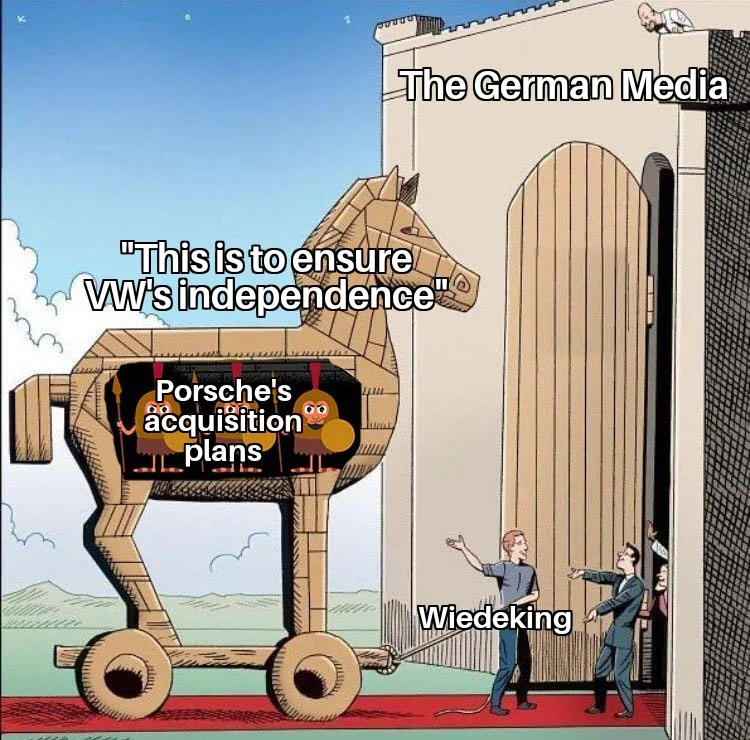
Porsche shrouded their motives via a patriotic stance stating, “Our planned investment is the strategic answer to this risk. We wish in this way to ensure the independence of the Volkswagen Group.” The “risk” here implies the possibility of German VW being taken over by an American or Japanese automotive giant owing to VW’s low market capitalisation at that time.
#2
For a Porsche and Volkswagen Finance 101 –
Volkswagen at the time sold 60 times as many cars as Porsche but had poor profit margins. For $125 billion in sales in 2005, VW only generated $3.3 billion in net profit. Owing to these terrible margins, the market capitalisation was poised at a meagre $17 billion.
However, Porsche with a revenue of $7.2 billion, churned a profit of $1.44 billion during the same fiscal year. Therefore, despite the evident discrepancy in scale, Porsche did boast the financial might to take over VW.
Volkswagen Rule – A Red Flag for Porsche’s Plans
During the time, VW’s independence was safeguarded by the Volkswagen Rule. The rule essentially gave 20% ownership of the company to the local German government of Lower Saxony and curbed the voting rights of individual investors.
Basically, VW could not be acquired until the German government gave up their 20% stake and repealed the VW act.
However, since the VW act was a fundamental violation of European Union capital laws, Porsche believed it had the leverage to successfully lobby against it.
Porsche Redlines Investments
Having made the assumption that the VW law would be ultimately scrapped, Porsche had gradually started increasing its stake in VW from 20% to 25% to 29.9% when mainstream news caught onto the affair.
A Businessweek headline stated, “Porsche’s ‘King Looks to Expand Empire”. Wiedeking’s ambition was evident, but he preserved his stance maintaining that Porsche believed that VW’s stock was cheap and presented an opportunity – and that they had no motive to take over VW.
“I believe VW really is a gold mine. The only thing is that you have to dig day and night” he said in an interview.
Having witnessed Wiedeking’s prowess at turning around dilapidated businesses, the markets turned optimistic about VW’s future. Porsche was no longer the odd buyer of Volkswagen stock, the markets followed suit, bestowed more volume, and the shares skyrocketed in value.
In March 2007, Porsche revealed that it had accumulated 31% of Volkswagen, the shares were up 95% since Porsche’s initial investment in 2005.
One year later, Porsche hit the milestone of having bought 50% of Volkswagen – share prices had more than tripled since Porsche’s first investment.
Porsche’s Wizardry at Financial Engineering
Car enthusiasts worship Porsche for their precise automobile engineering, while Hedge funds despise Porsche for their intricate financial engineering.
As Porsche boosted their stake in the company, it sent buy signals to the rest of the markets. VW stock despite being intrinsically frail had multiplied several times in value. All of this was artificially generated demand, VW stock was essentially trash without Porsche’s association which would supposedly end soon – it was a bubble ready to burst, a bubble that hedge funds were ready to pounce upon.
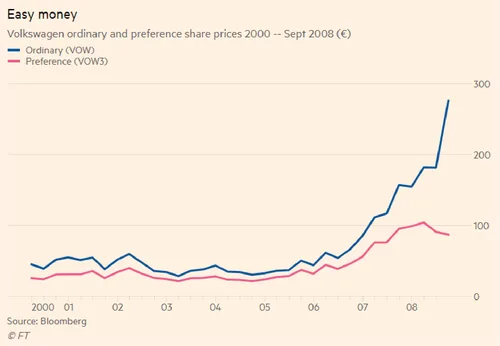
At that time there were two “variants” of the Porsche stock – Equity/Ordinary and Preferential shares. Equity shares were the nice stuff, the stuff Porsche was stockpiling because they would yield them voting rights.
Preferential shares on the other hand were simply neglected since they did not represent board seats. Porsche did not want these shares, and therefore neither did the markets.
#3
One could arguably say that the preferential shares at the time represented the actual intrinsic value of Volkswagen shares. Since the equity twin was being artificially inflated by Porsche.
In 2008, Wall Street messed up, another financial crisis commenced, stocks nosedived, but not Volkswagen Equity shares.
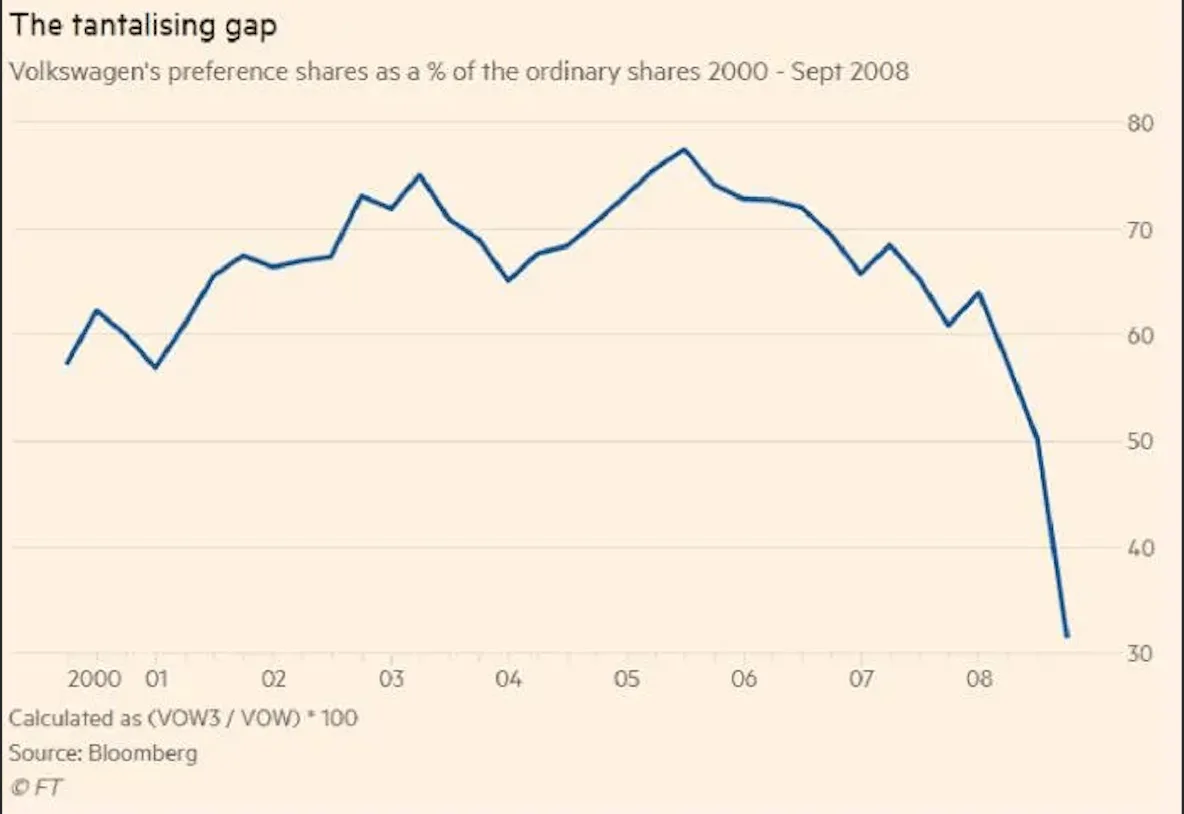
The spread between Porsche Equity and Preferential shares had considerably widened. Hedge funds strategised that if they shorted Porsche Equity shares but simultaneously bought Preferential shares, they would generate abysmal gains when the markets accepted logic – that is when the prices of the two fundamentally similar securities converged.
By 2008, Porsche’s preferential stock was worth about 30% of the equity lot – basically, preferential shares were grossly underpriced, while the equities were grossly overpriced.
#4
Every sane investor, hedge fund, wallstreetbets enthusiast, or even simulator kid bought the preferential shares and shorted the equity back then hoping to land a pro gamer move.

#5
By the end of 2008, 12% of all Volkswagen equity shares had been shorted.
For the shorts, it was an obvious bubble, nothing could possibly go wrong, it seemed like a foolproof way to make money, or was it?
Say Hi to our ambitious duo, CEO Wiedeking and CFO Härter
While the shorts, contented with their trade, were dozing off in shorts, Porsche dropped the financial equivalent of an atomic bomb on the finance community.

Porsche’s board on their way to release the statement on Jan 5, 2009.
.
The iconic press release read,
“Due to the dramatic distortions on the financial markets Porsche Automobil Holding SE, Stuttgart, has decided over the weekend to disclose its holdings in shares and hedging positions related to the takeover of Volkswagen AG, Wolfsburg. At the end of last week, Porsche SE held 42.6 per cent of the Volkswagen ordinary shares and in addition 31.5 per cent in so-called cash-settled options relating to Volkswagen ordinary shares to hedge against price risks, representing a total of 74.1 per cent.”
Porsche had sneaked their way into buying almost 75% of Volkswagen; to conceal their position all through, they utilised cash-settled derivatives – financial instruments that did not need to be revealed to the public by law, owing to a cash-settled nature.
A quick math 101 – Porsche now owns 74.1% of VW, 20% is held by the local German government. That leaves less than 6% of VW equity shares for the public markets against a 12% short float.
The Stuttgart auto manufacturer had unleashed its hedge fund tendencies; there did not exist enough shares in the market for the shorts to even square off their positions. Wiedeking had “cornered” the markets and orchestrated a lethal short-squeeze.
Volkswagen Goes Brrrrrrr
On October 27, 2008, Volkswagen opened at $438 per share, 75% higher than the previous close of $249. This was insane but the best was yet to come.
The next day, VW opened at $580 and soared to $1180, eventually closing at $1090. At $1180 per share, Volkswagen momentarily became the most valuable company in the entire world – with a market cap of $420 billion.
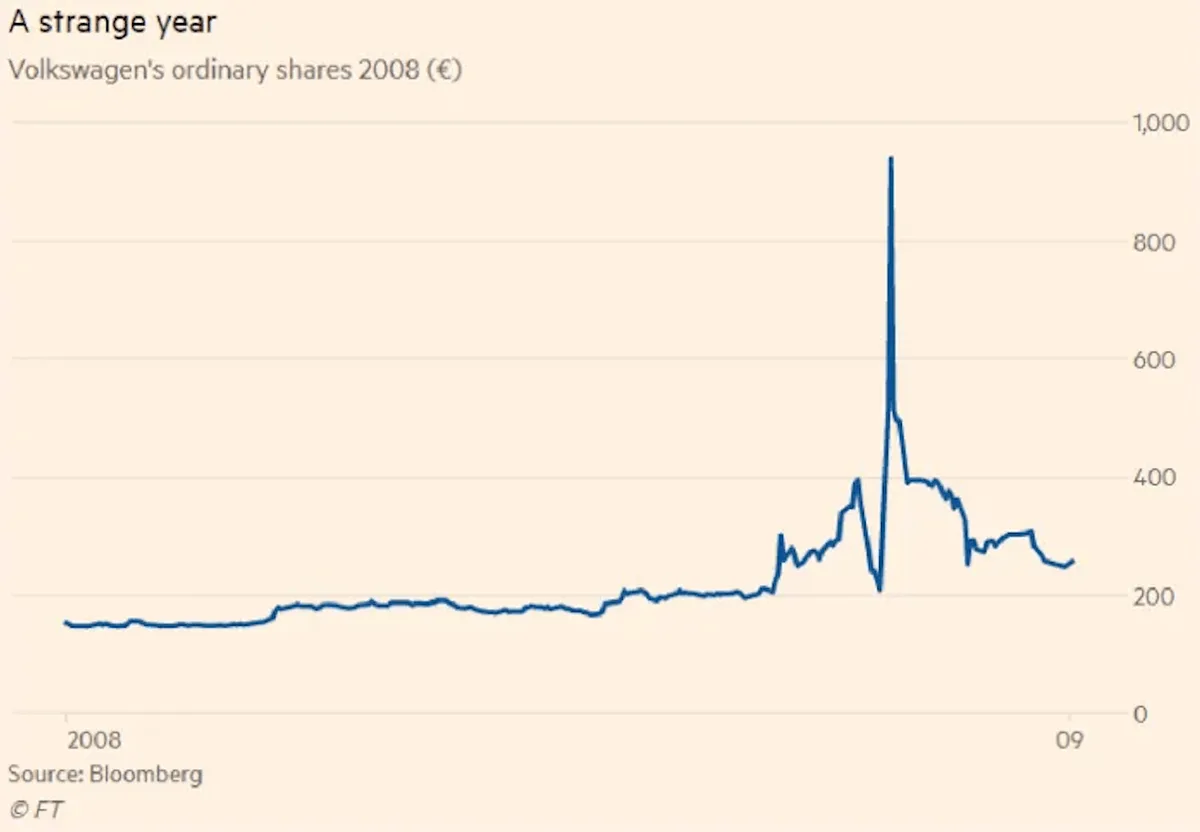
A graph of the short-squeeze.
To elucidate how monumental this was, VW, a battered German car manufacturer, had a higher market capitalization than General Motors, Honda, Apple, Microsoft, and Berkshire Hathaway COMBINED.
The duo had quite literally turned VW stock into a “goldmine”. Hedge funds were weeping – they are estimated to have booked losses of about $30 billion.
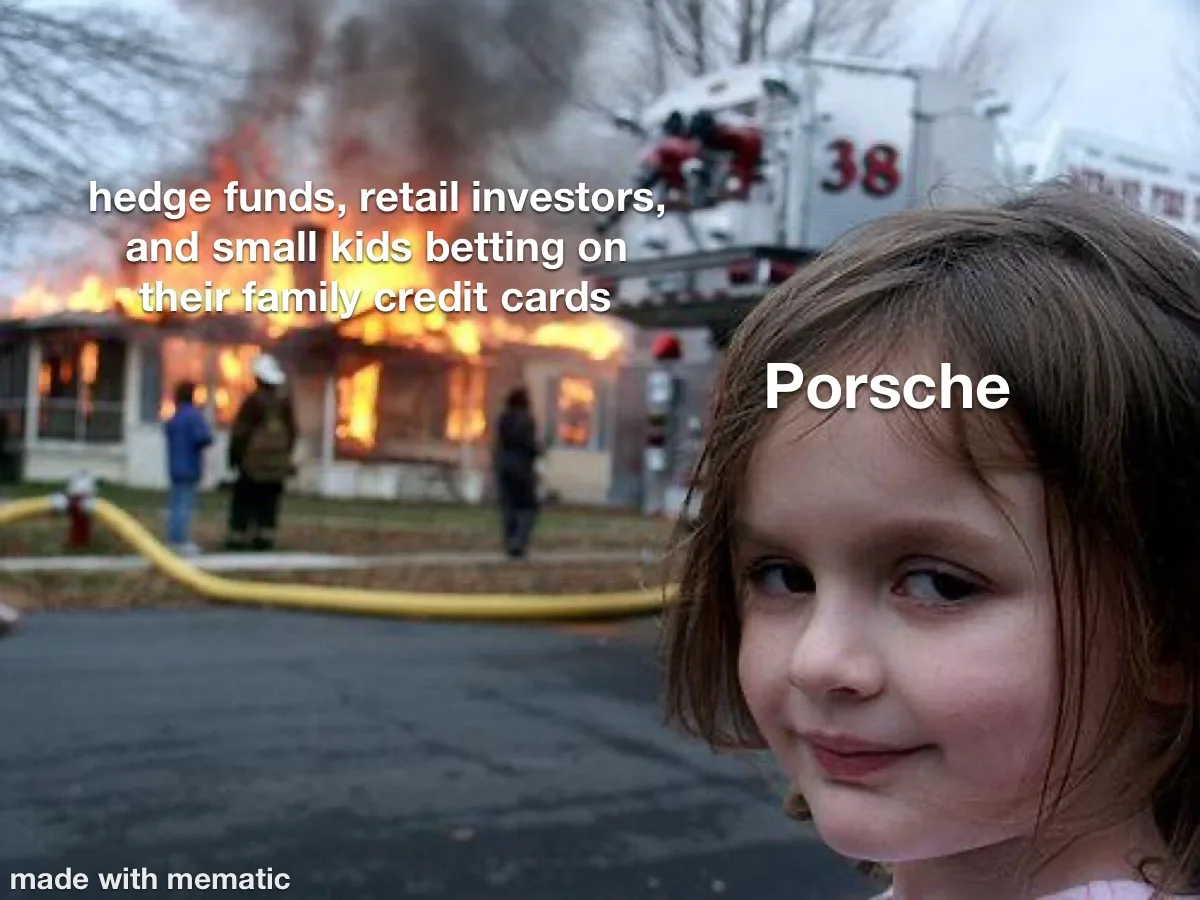
#8
Porsche, a few days later announced a sale of 5% of its VW stake to provide “liquidity” to the market. Having used the “liquidity” excuse to dump 5% of holdings at an exorbitantly high price, Porsche achieved $13.5 billion in pre-tax profit that fiscal year. To achieve similar numbers via their routine car manufacturing business, they would require a $136,000 profit margin on every car they sold.
Wiedeking and Härter had established their presence as financial geniuses and Porsche was “speeding” towards a total takeover of VW. With billions of Euros bagged, nothing could possibly go wrong for them – but everything did.
Porsche Oversteers a Bit Too Much
When the company started accumulating VW shares, it held about $6 billion in cash reserves but were quickly exhausted. As Porsche boosted its arsenal of VW shares, share prices soared – every investment by Porsche practically made VW shares and hence the acquisition more expensive for Porsche itself.
It was kind of like a vicious cycle, Porsche announces an increased stake in VW – the markets go mad – VW stock price goes mad – Porsche has to pay more for every VW share now – Porsche goes mad.
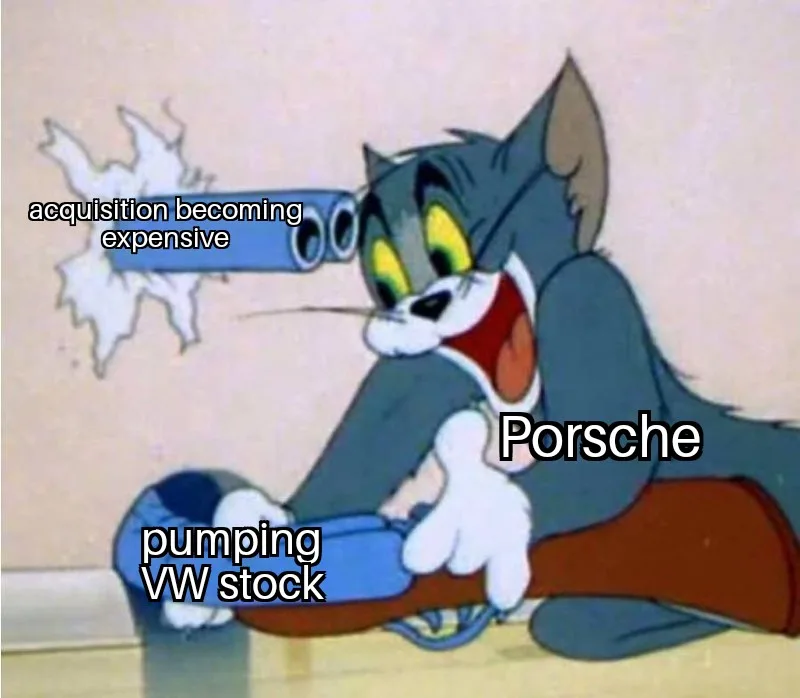
#9
So, CFO Holgen Härter did exactly what he boasted he would never do; Porsche undertook debt – $13 billion of it.
Porsche contemplated that their current profitability would enable them to sustain the interest payments. Furthermore, when the VW Rule was revoked, they could attain 80% of Volkswagen and access their cash reserves of over $11.4 billion, sufficient to pay the principal.
The plan rested on two assumptions –
- Porsche would stay profitable
- The VW Rule would be scrapped.
None of these assumptions would actually materialise.
Prepare for Trouble and Make It Double
Why did assumption #1 fail?
Well, it was 2008, Wall Street had collapsed, millions had lost their jobs, heck, even the billionaires couldn’t preserve their wealth. It was a bad time for everyone, no one, absolutely no one, was in the mood to buy a Porsche.
Not only did they fail to sell cars, but since most of the banks had ruined themselves thanks to sup-prime mortgages, Porsche also failed to negotiate and refinance their loan.
Why did assumption #2 fail?
Hail the VW Guardian – Ferdinand Piëch
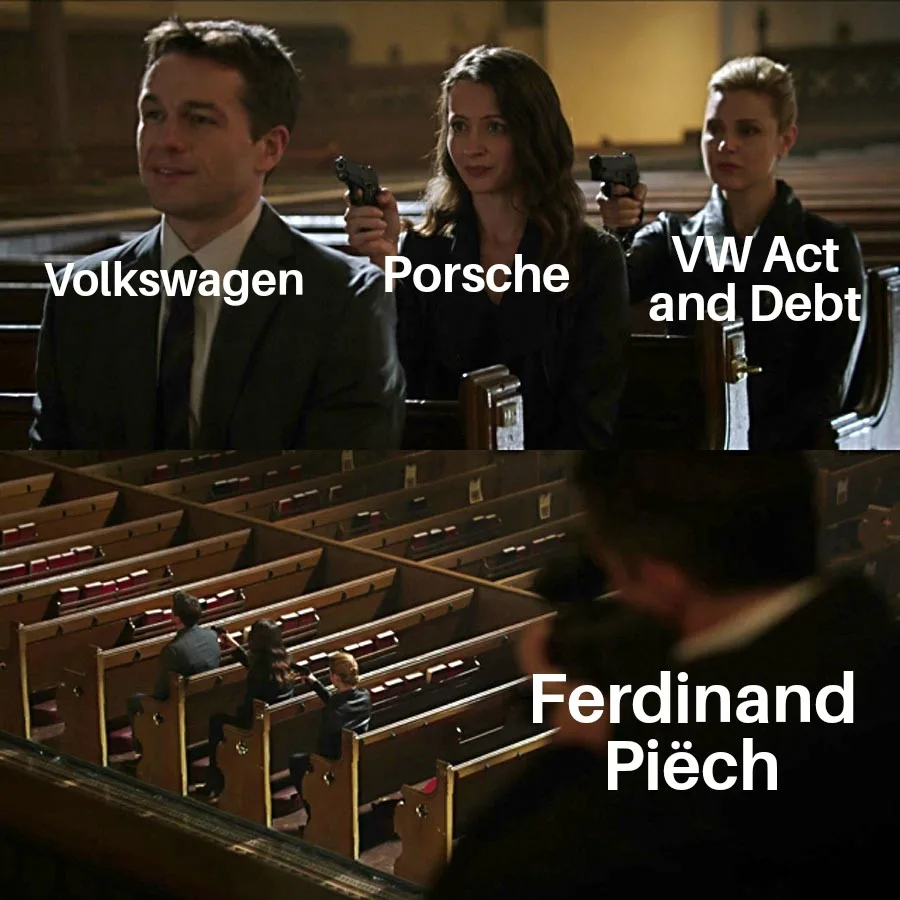
While Porsche was untangling their financial woes, VW Chairman Piëch was pulling strings to solidify the VW Rule and counter Wiedeking’s attempt to having it scrapped.
Turns out that board members of VW had close ties with the local government of Lower Saxony, who in turn had close ties with Angela Merkel, yes, the Chancellor of Germany.
Under her influence, the VW law was never scrapped. While the law was preserved, Porsche’s shot at acquiring VW rotted away instantly.
Porsche could not lawfully attain 80% of VW and therefore could not access VW’s cash reserves to pay off the debt. Their plan had terribly failed.
An ambitious Piëch, who was seemingly chilling while Porsche engulfed his company, presented himself at the last moment, rang up a couple of numbers, flexed his influence, then went back to chilling again. He made Porsche’s attempted takeover look like a circus.
#10
*Insert Sad Wiedeking Noises*
So now, Porsche had
- $13 billion in debt
- No profits to pay off that debt
- No access to VW’s reserves
- “Angery” hedge funds chasing them
- Financial manipulation lawsuits
- No banks willing to refinance that debt (It was 2008, banks were more stressed than teenagers)
- One “angery” CEO
- One “angery” CFO
While VW had
- One overly ambitious Ferdinand Piëch
- Excessive cash reserves
- The VW Rule
- The German Government’s backing
Piëch “Sympathises” – The Tables Turn
Porsche’s deadline to repay the $13 billion loan is approaching, they are on the verge of bankruptcy, a bailout is imperative.
Aaaaaand in comes an overjoyed Piëch, even more overjoyed to hand over Porsche a $950 million loan. The purpose, on paper, is to yield Porsche enough time to find investors and attain sufficient capital to fulfil their debt obligations. But – it is easy to infer that Porsche is now at the mercy of VW.

#11
The titans had clashed, Piëch had indebted Wiedeking.
Piëch Unshackles his inner Pablo Escobar
As time passed, VW gradually started to assert its dominance.
During a VW event, Piëch stated –
“The men were partly responsible for Porsche’s precarious financial position, and VW’s cash would come with strings attached.”.
The “strings” hinted at a possible VW takeover of Porsche if the $950 million loan wasn’t rendered back.
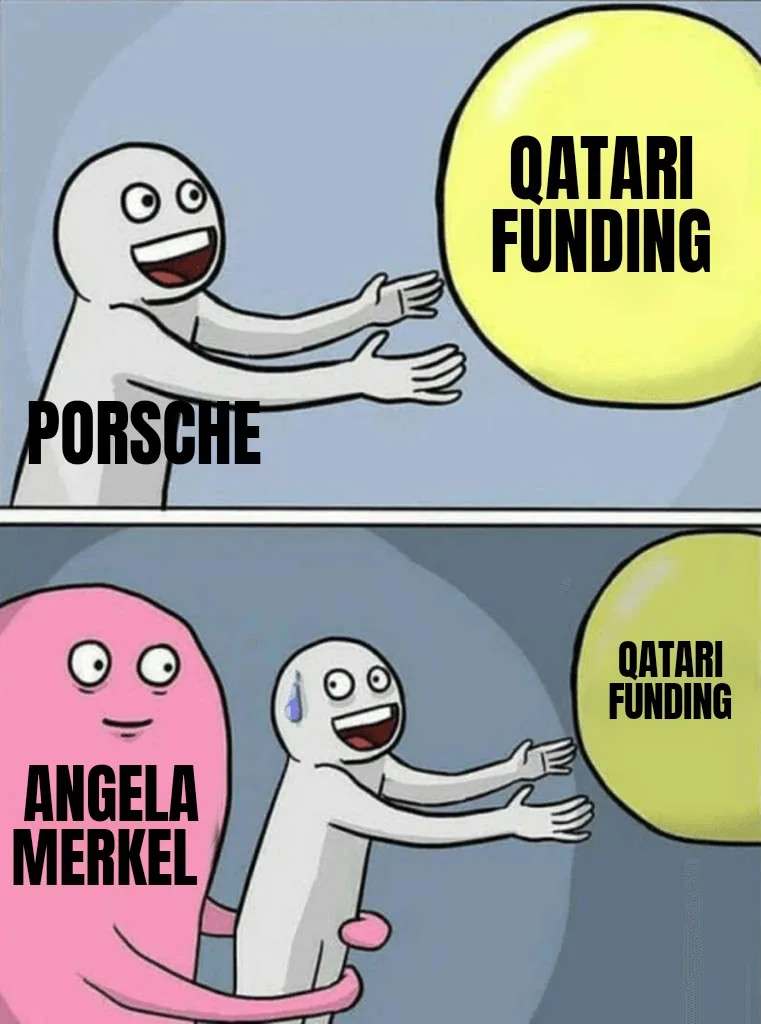
Thankfully, Porsche had struck a deal with the Arabs – the Qatar Sovereign Wealth fund had agreed to obtain a sizable stake (25%) in Porsche; the capital infusion would eliminate all the debt.
Porsche would not be able to acquire VW, but could at least retain its independence, right?
Piëch Goes for the K.O.
Porsche had almost finished untangling its abundance of financial woes, but Piëch was once again ready to trample over all the progress they had made.
The Qatari deal was allegedly diverted from Porsche towards VW, owing to persuasion by the German government – Merkel strikes again.
#12
It was concluded that Porsche could only attain the Qatari capital if they paired up with Volkswagen.
Wiedeking had already busted his acquisition plans, to add to the mess, he had also put an end to Porsche’s long hailed independence – An acquisition by VW was the only way out.
In 2009 the verdict was out, and on August 1, 2012, the final cheque was inked – VW had bought the Porsche Automobil Group for $11.3 billion.
The hunter, at last, had been hunted.
Wiedeking’s profound ambition had come full circle – much like the snake engulfing itself in the snake game – to sacrifice the company he built back up from ruins. Porsche, one of the most iconic and profitable sports car brands, had become just another pawn in VW’s assortment of acquisitions.
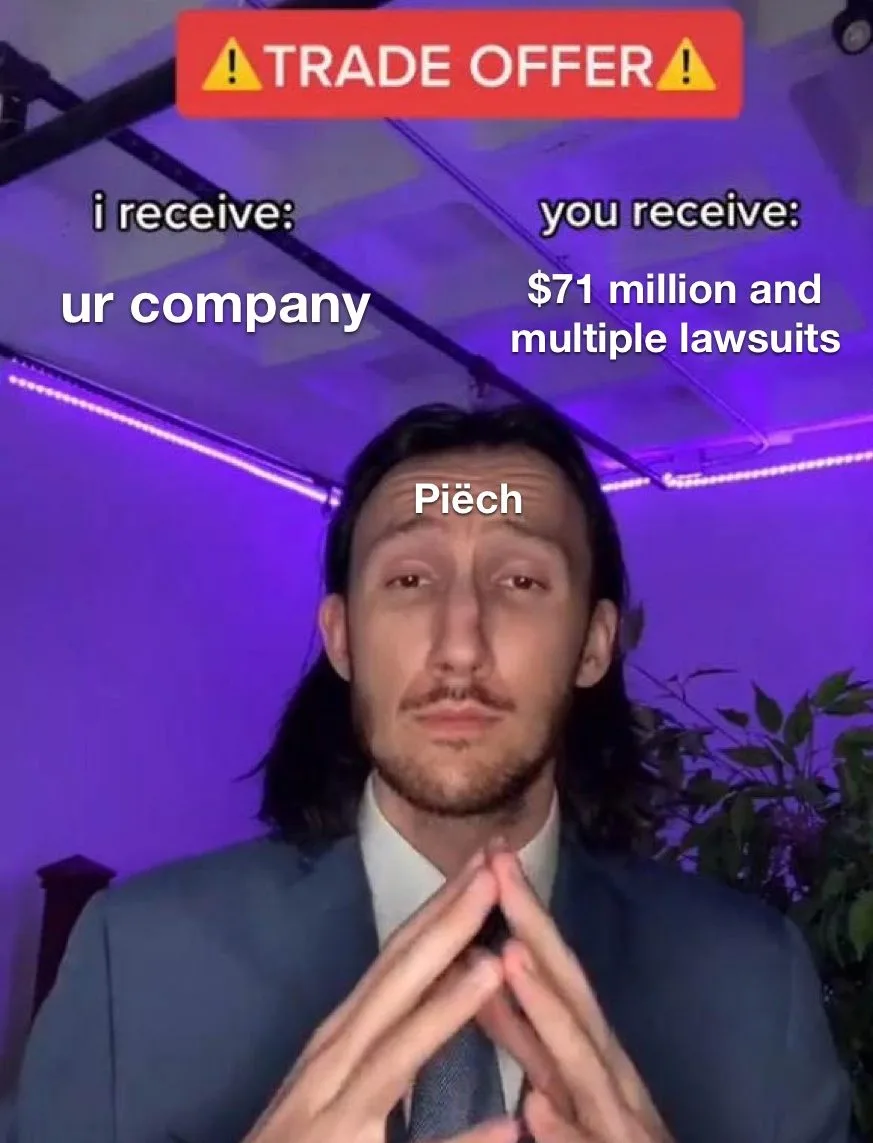
Nevertheless, Wiedeking was paid $71 million to scoot through the back door, while former CFO Harter received another $18 million. Apart from the monetary rewards, both were bombarded with financial manipulation lawsuits for having fueled the short-squeeze.
#13
Piëch Rules the Empire
A grossly content Piëch, having regained control over his Grandpa’s business, stated – “Together, Volkswagen and Porsche have all it takes to occupy a leading position in the international automotive industry.”
He would set out that day to celebrate – this time not in his good old VW Touareg, but in his shiny new Porsche Cayenne.
To conclude,
Porsche went for a target well above its financial capacity, during the episode it happened to single-handedly craft an absolutely unhinged financial trade – one that dwarfs the GME short-squeeze. Everyone was hyped, just for debt to blow up Porsche’s engine in the last lap, when Piëch – piloting a feeble VW Polo – would overtake them.
The learning,
Ambitiously curtail your overambitious tendencies…
.
.
.
.
.
.
Extras that absolutely no one asked for –
Porsche’s Financial Geniuses are Summoned to Court
Much to the pleasure of Hedge funds and the general public, in 2016, Wiedeking and Härter were proven guilty of market manipulation. However, they did not face any criminal charges, the verdict of having them labelled as guilty was a symbolic effort to uphold the credibility of the German financial markets.
Ferdinand Piëch passed away in August 2019, four years after he resigned from Volkswagen in 2015.
Over the years, Piëch had accumulated immense respect for his name – he bootstrapped VW and made it stand confidently among global giants, he defined Audi as a brand, the man even spearheaded the development of the Bugatti Veyron.
The engineer had nailed the entire spectrum of automobiles – from the ideal grandma’s car to the fastest production car on the planet.
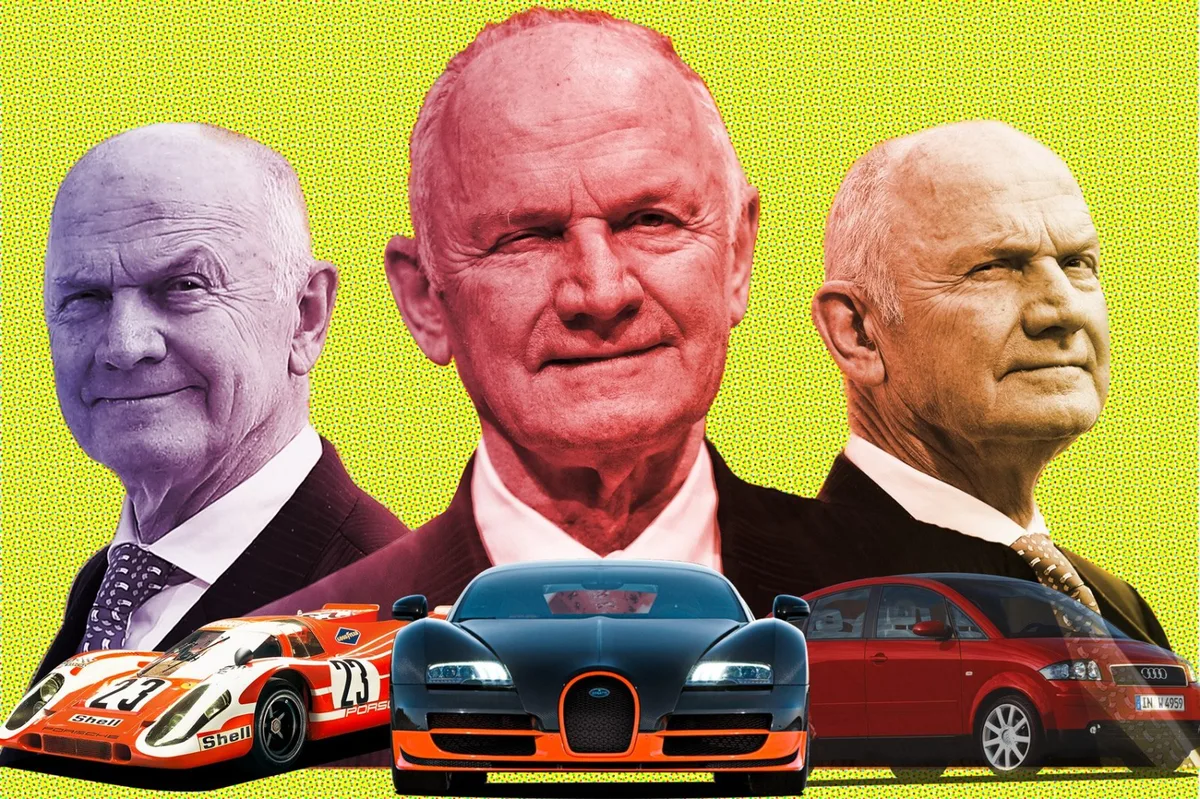
Ferdinand Piëch’s diverse automobile development.
Ferdinand Piëch left behind a legacy, his loss, the car community and beyond unitedly mourns.
.
.
.
.
.
.
Cover Image Credits – @Kaavya Sawhney