The Nasdank Stonks Journal #1
Hi reader, I might experiment with this concept of bundling together interesting events pertaining to the financial markets and publishing them once a week/month (we’ll see how it goes). This journal will adopt the same approach as my blogs – meme heavy but without skewing the underlying concept/event.
Welcome to the first edition of The Nasdank Stonks Journal, happy reading!
SPACs Go Brrrrrr
Special Purpose Acquisition Companies seem to be Wall Street’s new fad and have attracted about $40 billion in investments since the commencement of 2021, (average investment per IPO being $296 million) making them an $800 billion market. Many businesses perceive this route as a swifter method of raising capital during the current market buoyancy – as an example, Lucid Motors- a Tesla rival- plans to go public through the $CCIV SPAC.
SPACs or blank check companies are incorporated and publicly listed for the primary objective of raising capital for acquiring a business, thereby, indirectly listing the acquired business. This eliminates the lengthy legal arrangement required to go public. While a traditional IPO can take several months, SPACs can do the same within weeks. A point to note this that SPACs do not have any underlying business, and the capital they possess is what they raise through their own IPO.
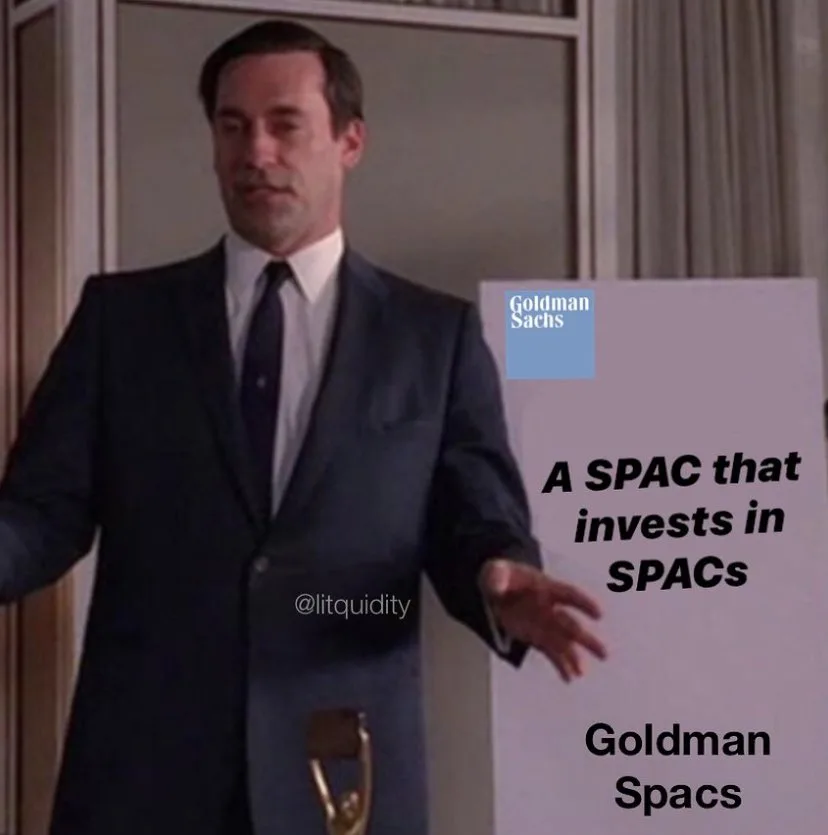
The investment vehicle is, however, very risky. Investors might have an idea of what industry the SPAC is targeting but are not aware of the business that it might eventually acquire. Investing in SPACs is like opening a pack of Pokémon cards – you might have a decent chance of getting a Charizard but can always end up with a Rattata.
NFTs and CryptoKitties
With Wall Street’s new fad out of the way, let’s discuss retail’s new fad – cats, yes, but, digital.
NFTs or Non Fungible Tokens are unique pieces of digital artwork that can be sold on blockchains via smart contracts. As the name suggests, they are non-fungible – cannot be replicated or replaced/exchanged with something identical.
To elucidate, any crypto or fiat currency is fungible, you can exchange a 10 rupee bill for another 10 rupee bill, there’s nothing unique about it. Now let’s say you’re friends with the RBI and they print you a 15 rupee bill, you can’t exchange that with another 15 rupee bill because another example simply doesn’t exist, you’re the only one to have that unique note. Yes sure, your friends can take some photos and print them later but only you have the original note – you get the point.
NFTs are similar, any unique digital piece of art – from an intricate digital masterpiece to your first attempt at drawing the human digestive system – can be sold on the Ethereum blockchain. Again, there might be hundreds of exact same copies of the digital art but only one individual boasts the ownership rights.
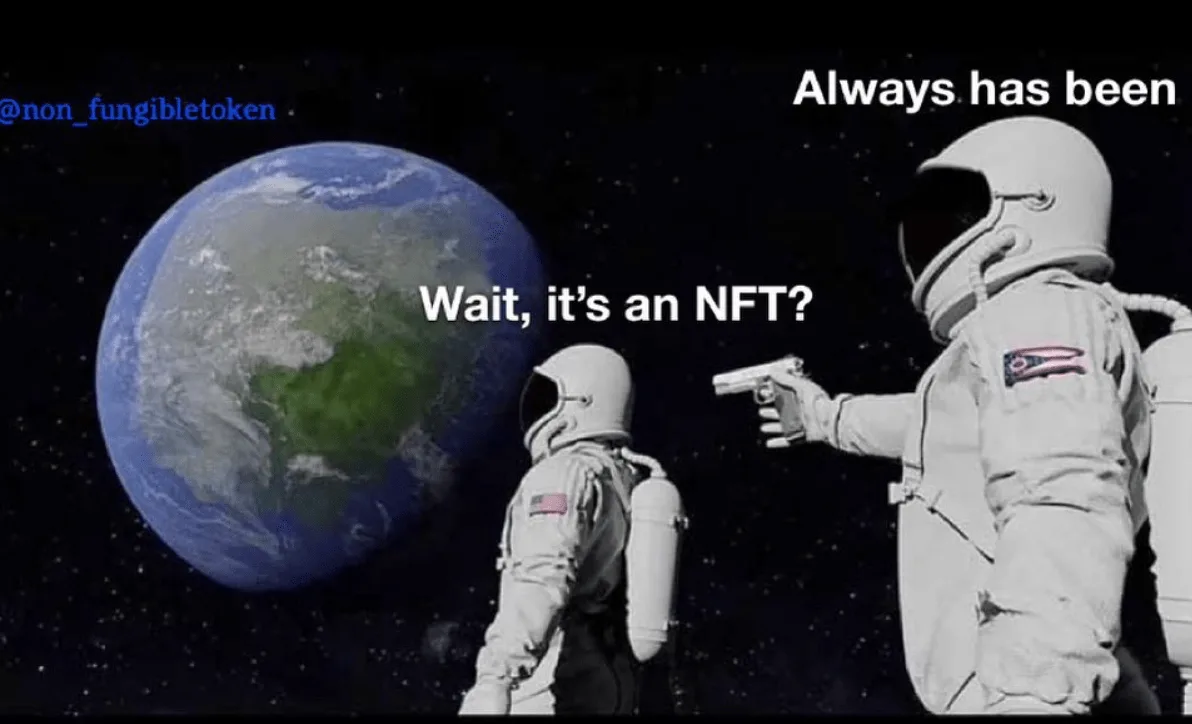
Is the earth an NFT hMmMmmM
NFTs are about the ownership of digital art, not necessarily their possession.
Now, to cats – CryptoKitties is like DragonVale, but on steroids. It is one of the first leisure applications of blockchain tech. One can basically collect, breed, and sell virtual cats. These characters are again, non-fungible, apparently have their own DNA, and cannot be replicated, stolen, or edited. Perceive yourself as a pro cat hacker? These cats are stored on the Ethereum blockchain and are protected by cryptographic hashing functions and a plethora of other computer science wizardry – I wasn’t messing around when I said “DragonVale on steroids”.
To list some recent NFT sales –
- According to the NFT sale tracking website nonfungible.com, “investors” have spent more than $171 million buying digital art just the past month.
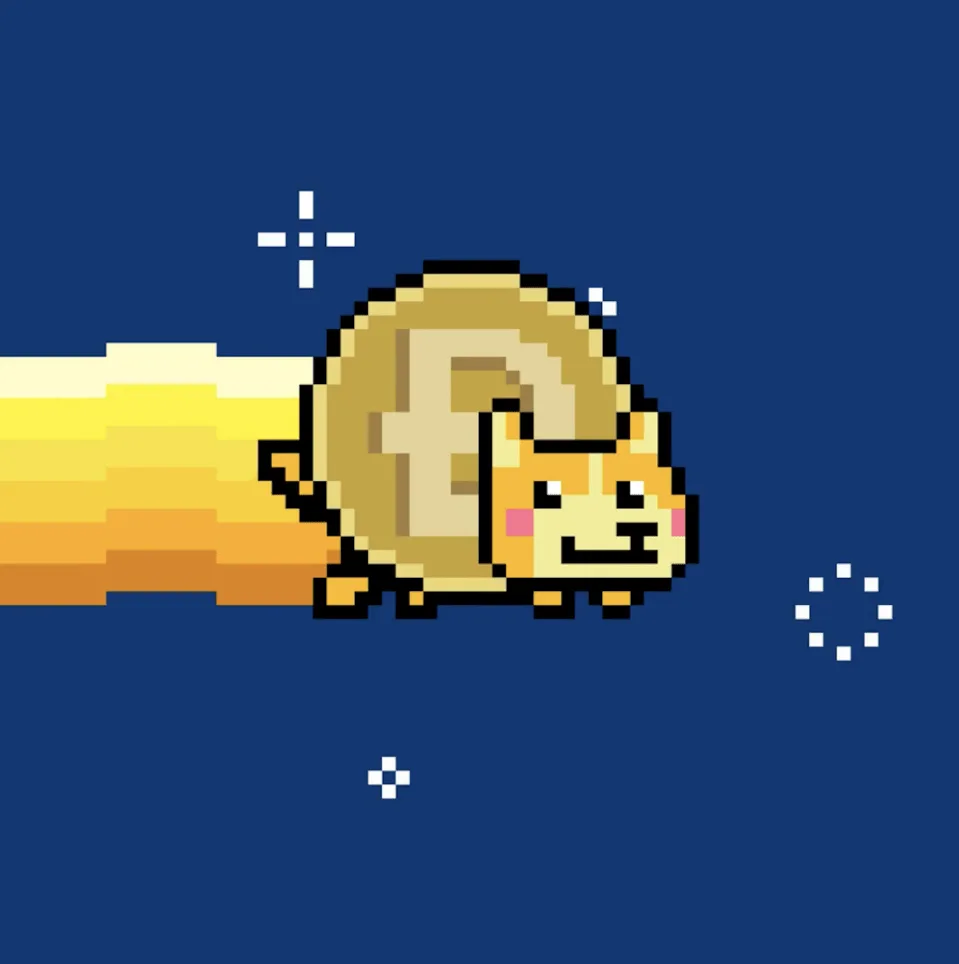
- An NFT of the Nyan Cat meme sold for around $580,000 last month.
- Musician Grimes has raised over $6 million from recent NFT sales, some proceeds were donated to NGOs working towards reducing carbon emissions.
**
A still of the Nyan Dogecoin GIF that sold for 45 ETH (USD $69,000)
(Mondo/Chris Torres/Foundation)**
NASDAQ and Crypto Big Sad
The US stock markets witnessed a severe correction following treasury bond yield concerns and disappointing earnings, thus, terminating the prolonged bull run. The tech-heavy NASDAQ Composite shed about 8% during the past month, the YTD return is now 1.75%. The S&P 500 has fared relatively better by declining about 1.9%, the YTD return is at 4%.
The effects reverberated across to the crypto market as well, which was further exacerbated by Elon Musk tweeting “BTC & ETH do seem high lol”. Bitcoin saw a decline of about 17.7% (-$9915) between Feb 19-26. Ether dipped 27% (-$490) during the same period.
Thanks to relentless tweeting by their CEO and volatile Bitcoin investments, Tesla shares took a beating too. $TSLA has lost 30% of its market capitalization during the past month; safe to say, investors want Musk’s Twitter deleted.
$BUZZ ETF
After the GME saga, no Wall Street analyst would dispute that WallSreetBets has the might to move, and I mean MOVE markets. The market sentiment seems to rule “stonks” lately, so what do you do to “Improvise, Adapt, and Overcome” in the changing market landscape? Well, you launch an ETF (Electronically Traded Fund) that tracks market sentiment and automatically buys skyrocketing “meme” stocks. This is exactly what Dave Portnoy, founder of Barstool Sports, has implemented with the $BUZZ ETF.
The ETF went live on March 5th, 2021, and, by volume on debut, is the 12th most successful ETF ever; it is currently priced at around the $23 range.
An ETF is basically a financial derivative with a bucket of underlying assets – which in the case of $BUZZ are stocks selected by an algorithm tracking online sentiment.
GME Congressional Hearing
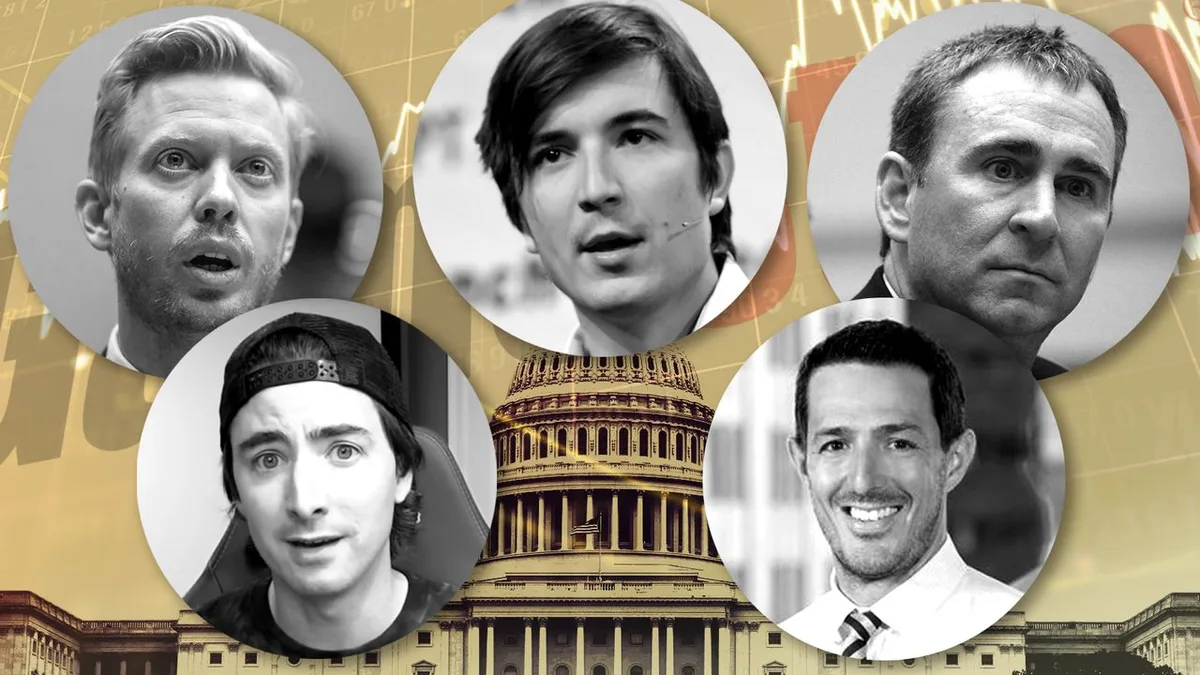
MARKETWATCH ILLUSTRATION
This list aims to sum up the “significant” developments –
- Vlad Tenev, founder and CEO of Robhinood, failed to answer simple yes/no questions.
- Melvin Capital and Citadel representatives spent hours defending the payment for order flow mechanism* but couldn’t substantiate why it was actually beneficial for retail investors.
- Keith Gill, representing WallStreetBets, informed Congress that he wasn’t a cat and concluded his testimony with, “As for me, I like the stock”.
- Vlad Tenev failed to answer more yes/no questions.
- Rep. Brad Sherman suggested Citadel CEO, Ken Griffin, join the Senate after observing his excellence at filibustering.
- Keith Gill explained that GameStop was still “an attractive investment”, the message sent GME shares “roaring”.
- Reddit founder and CEO argued that r/wallstreetbets “has managed to raise important issues about the fairness and opportunity in our financial system, I am proud that they used Reddit to do so”.
- And Vlad Tenev again failed to answer simple yes/no questions.
To conclude, the lawmakers did not seem to hold Reddit or r/wallstreetbets accountable for the GME fiasco but questioned the business models and investment tactics of involved hedge funds and brokerages. There’s an ongoing probe by the SEC and FINRA into Robinhood’s conduct during the GME rally, and Robinhood might have to pay a fine upwards of $26 million for poor communication with customers.
*Payment for order flow is a mechanism that allows for commission-free trading, basically the brokerage (Robinhood in this case) routes all orders to market makers like Citadel Securities for execution. The market makers in turn pay the brokerage for such order flow. This raises a conflict of interest because for the brokerage the real customer is the market maker and not the retail investor. While commission free trading might superficially sound affordable and accessible, investors often lose value from bad execution and inflated price quotes.
(If you’re still into it, the market makers ensure their profitability by earning the difference between the ask price and the bid price – the spread between what the buyer is willing to pay and what the seller is willing to sell the security for. Payment for order flow infrastructure allows market makers to widen this spread and increase profitability.)
This sums up the first edition of The Nasdank Stonks Journal, see you next week or, hmm, next month!
Cover Image Credits – Aditya Kumar