“The Single Best Trade of All Time”- Bill Ackman’s Big Short
Michael Burry’s bet against mortgage bonds foreseeing the housing market bubble was iconic. Featured in the book and the movie “The Big Short”, Burry used Credit Default Swaps as a hedge against sub-prime mortgages. His position ended up yielding his hedge fund, Scion Capital, a return of 167% in 2007. To emphasize the significance of this trade, during the financial crisis of 2008, the S&P 500 approximately lost 50% of its market capitalization.
Background and Basics
Burry’s trade was titled “The Big Short” because he essentially “shorted” or bet against the US housing industry. He used Credit Default Swaps to carry out his trade. Think of CDS as an “insurance” against a particular asset, if that particular asset were to go down in value, the value of CDS for that asset would increase. It is imperative to note that, for you to get CDS against a particular asset, you don’t necessarily have to own that asset. The assets that CDS act as a “hedge” or protection against are bonds like corporate bonds, market bonds, or mortgage bonds.
Ackman’s Trade
So with the basics understood, let’s dive into a position of 27 million USD that yielded a return of 2.6 billion USD, approximately 10,000% and that too within 30 days. This was Bill Ackman’s trade, founder and CEO of Pershing Square Capital Management, a prominent hedge fund.
Pershing Square Capital manages a portfolio of around 6.5 billion USD, which is spread across stocks like Hilton, Berkshire Hathaway, Starbucks, and Chipotle. A significant portion of the fund’s holdings was very volatile to potential lockdowns that could be imposed by the pandemic.
To protect his portfolio, Ackman scrutinized China’s early outbreak and the implications of a similar outbreak in the States well ahead of time.
In a podcast, he stated that he was considering liquidating a majority of his fund’s investments, however, he later decided to stay invested utilizing CDS as a hedge against an impending market downturn.
Ackman opted for Credit Default Swaps against investment-grade bonds and high yield bonds, the value of which could significantly diminish given restrictions were to be forced on business. He bought swaps worth 27 million USD in February when they were trading at record lows.
The position was right in the money, COVID spread like wildfire across the States, businesses were halted, and markets crashed. Ackman’s CDS skyrocketed in value yielding him an astronomical gain. A “modest” 27 million USD turned into 26 billion USD.
The Timing
Furthermore, Ackman’s timing was exceptional, entering into his position just before the commencement of the bearish market trend and liquidating his CDS at market’s record lows, he earned himself a window to re-invest his gains back into the stock market.
So not only did the fund gain from CDS, but also from investing when markets were at record lows, timely buckling in for the rally that followed.
“The Single Best Trade of All Time” as stated by William Cohan in an op-ed with the Wall Street Journal.
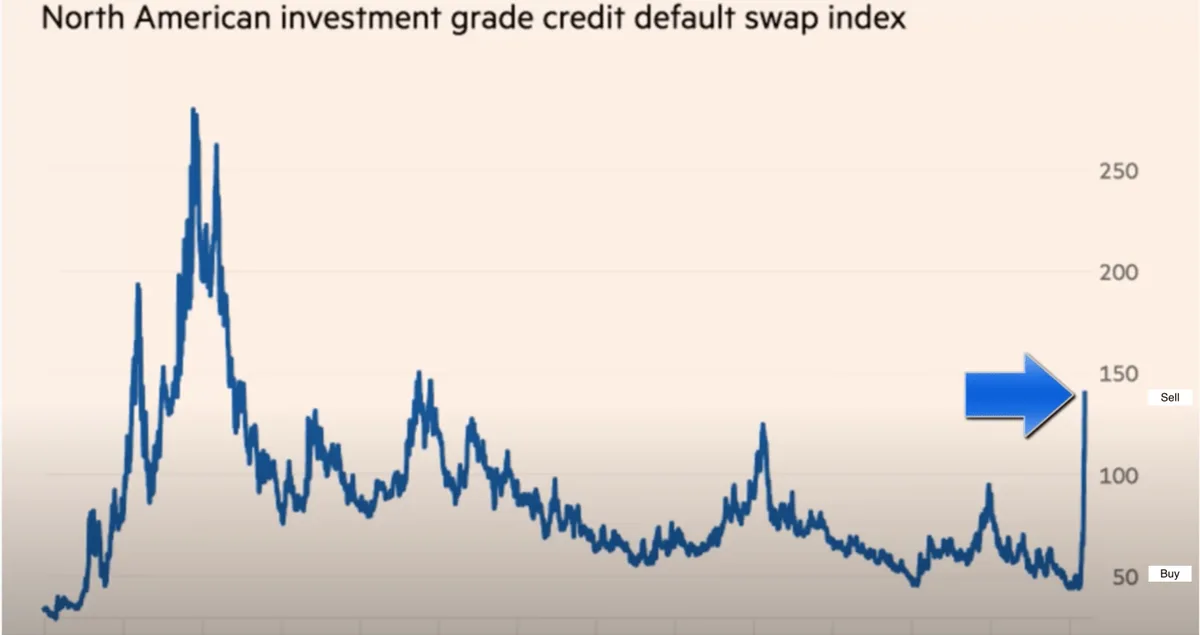
CDS Prices and Ackman’s Trade Timings
The Controversy
Like the majority of utterly successful trades, Ackman’s short soon turned into a topic of debate.
Firstly, there’s always been a controversy surrounding Credit Default Swaps.
These derivatives enable you to take insurance against an underlying asset without even owning it. As Buffett explained, “If someone took insurance against my house, they wouldn’t mind dropping a few matches in my lawn”
The second argument is related to Ackman’s interview on CNBC on March 18, where he claimed “Hell is coming”, speculating a market downturn due to the pandemic. Ackman had already entered his position well before he made the statement. Arguments suggest that making such a strong claim on National TV, given his positions, might have been an attempt to drive the markets his way.
Digressing from the controversies, as of August 11, Pershing Square Capital returned a YTD return of 39.4% as opposed to the S&P 500 YTD return of 3.8%.
Another legendary trade, worthy of being named “The Big Short”.